AI Enhances Prognosis Accuracy in Adult Traumatic Brain Injury via CT Scans
A systematic review and meta-analysis found that AI models significantly improve clinical outcome predictions from CT scans in adults with traumatic brain injury.
AI News Updates
Part 1 of 2
Table of Contents
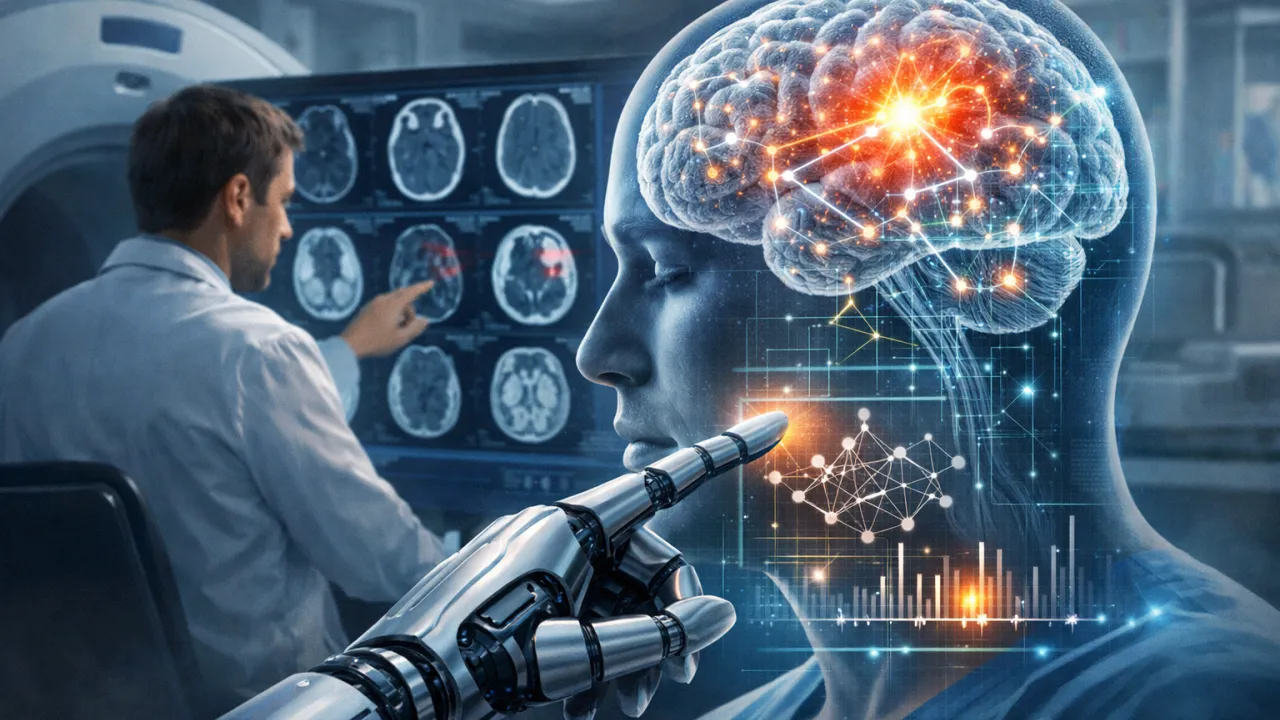
A systematic review and meta-analysis published in Discover Neuroscience evaluated the integration of artificial intelligence (AI) with computed tomography (CT) imaging for predicting clinical outcomes in adults with traumatic brain injury (TBI). The study synthesized data from 12 retrospective cohort studies, encompassing 7,536 adult patients, and reported AI models achieved high accuracy with a pooled area under the receiver operating characteristic curve (AUC) of 0.916 in forecasting long-term recovery based on acute CT scans.
The review highlighted that multimodal AI models combining imaging biomarkers with clinical data outperformed conventional radiological assessments relying solely on visual inspection. Commonly analyzed radiological features included hemorrhage characteristics, lesion volumes, cerebral edema, and midline shift, while clinical variables like age and Glasgow Coma Scale scores were also integrated to improve prognostic precision.
Despite promising discriminative performance, the authors noted significant heterogeneity among studies due to differences in imaging protocols, computational methods, and outcome measures. All included studies were retrospective, and there remains a need for prospective multicenter validation and real-world clinical trials to assess the safety, feasibility, and impact of AI prognostic tools before widespread clinical adoption.
This research marks a meaningful advancement in personalized neurotrauma care by demonstrating the potential of AI-enhanced CT analysis to improve outcome predictions in adult TBI patients.
Original source: Bioengineer.org. Bioengineer.org